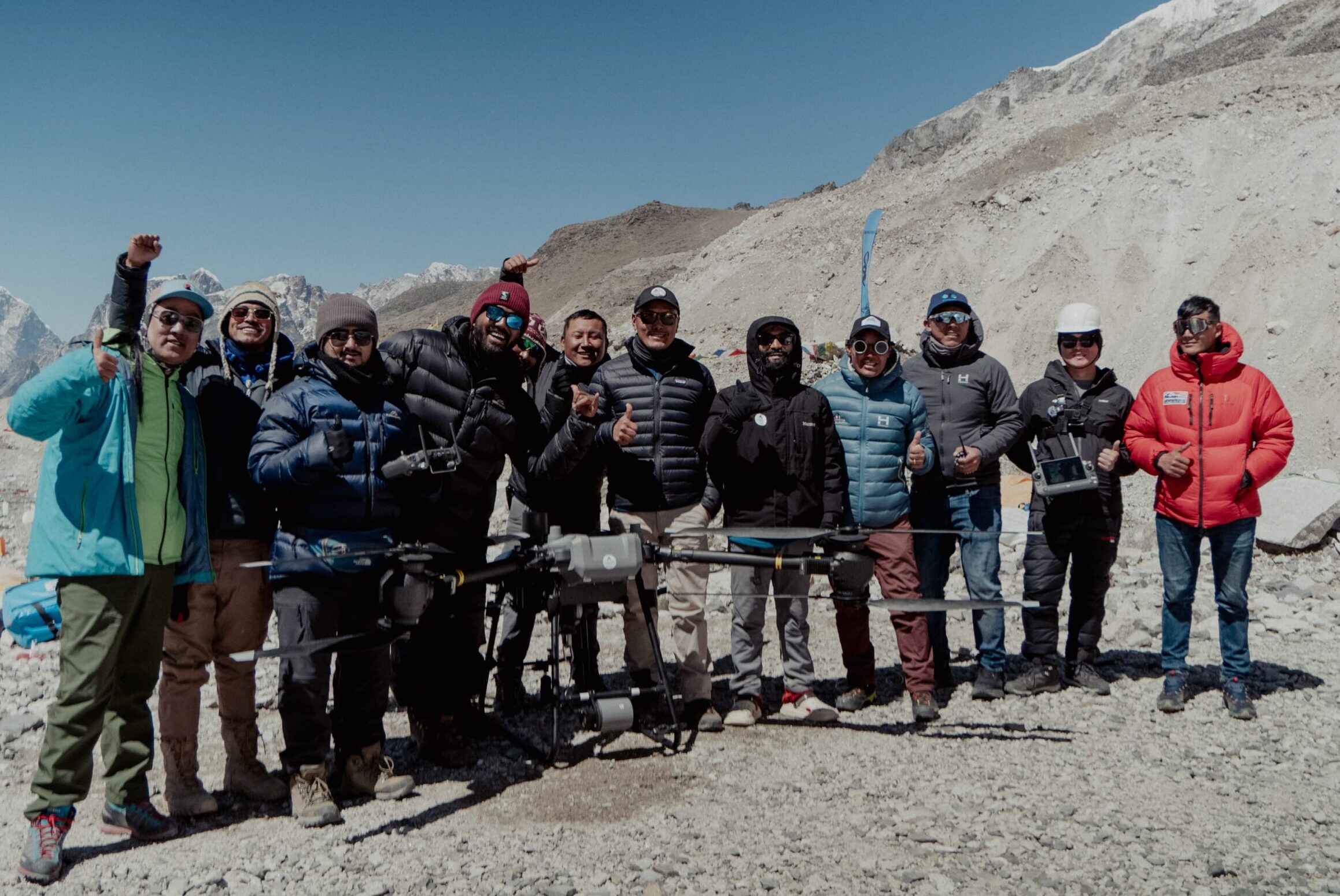
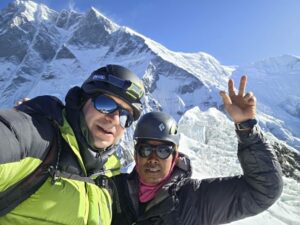
The Drone operation team at Everest Base Camp. Photo: Airlift Technology Nepal
Last week, the Sherpa team known as the Icefall Doctors completed the route through Everest’s hazardous Khumbu Icefall. They dealt with remarkably tough conditions because the ice was badly broken after a dry winter. But this year, cargo drones supported their work, helping minimize risk on the most dangerous section of the mountain.
We spoke with Raj Bikram Maharjan, CEO of the Nepal-based company in charge of operating the drones. We discussed their work on Everest and how drones can improve conditions for local workers.
Helping the Icefall Doctors
Maharjan is an aeronautical engineer who, after five years as an aircraft technician, started Airlift Technology to provide drone services. They offer everything from drone-assisted mapping to filming services. They are currently focussed on using drones for aerial delivery, and last year they took the job to the highest level.
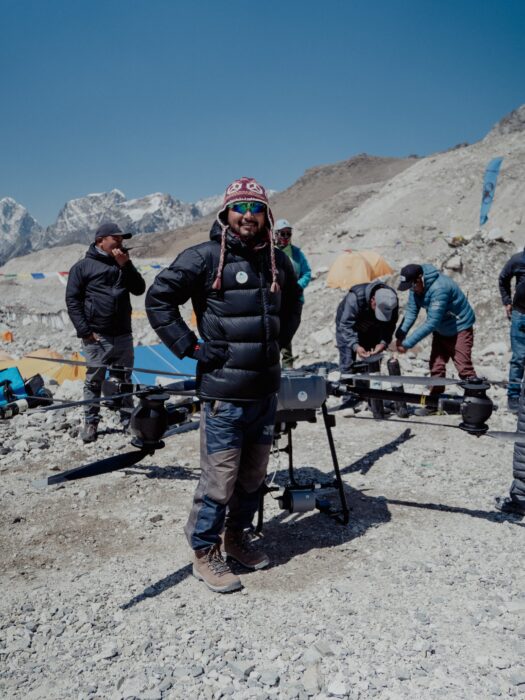
Raj Bikram Maharjan at Everest Base Camp last year. Photo: Airlift Technology Nepal
In the 2024 spring season, Airlift Technology partnered with Khumbu Valley Municipality for some preliminary tests to see how they could use drones on Everest. Positive results prompted the Sagarmatha Pollution Control Committee (SPCC) to request their services.
Airlift Technology agreed to help equip and maintain the route to Camp 1 through the Khumbu Icefall and manage the waste produced by climbing expeditions.
Angela Benavides graduated university in journalism and specializes in high-altitude mountaineering and expedition news. She has been writing about climbing and mountaineering, adventure and outdoor sports for 20+ years.
Prior to that, Angela Benavides spent time at/worked at a number of local and international media. She is also experienced in outdoor-sport consultancy for sponsoring corporations, press manager and communication executive, and a published author.