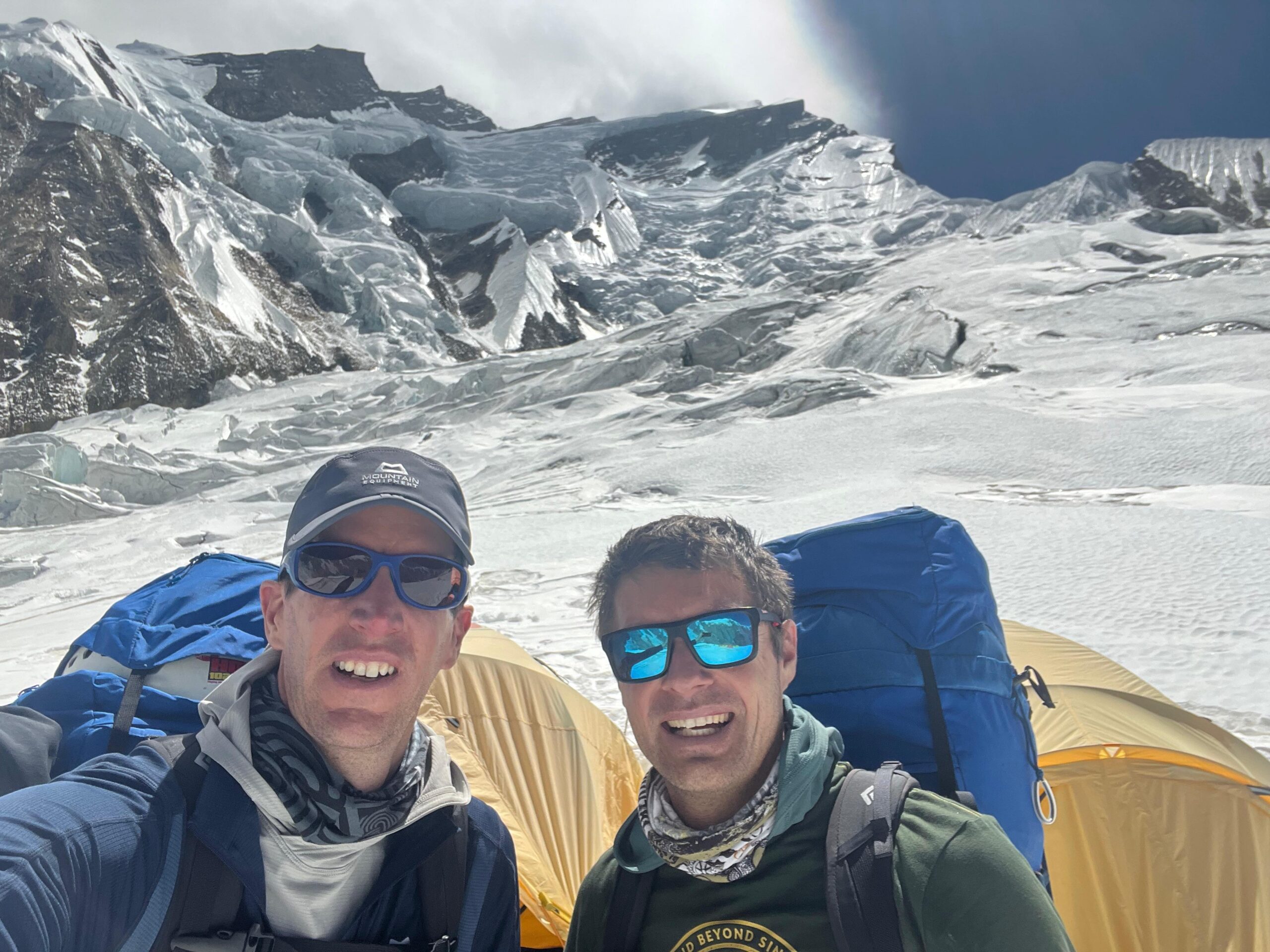
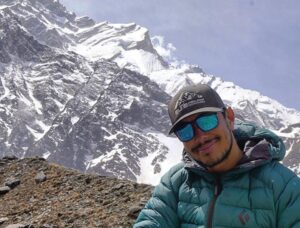
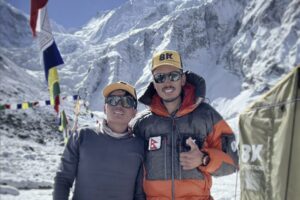
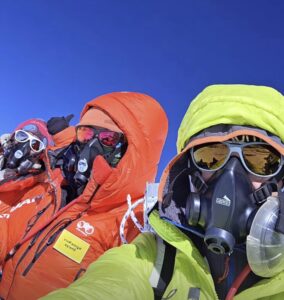
John Black (left) and Warren Eva at Camp 1 on Annapurna. Photo: John Black
Commercialization is here to stay on Annapurna. While resources are optimized and summit rates maximized, there are also worrying trends. There are too many inexperienced climbers, an alarming number of rescues, and local workers are losing their lives.
South African climbers Warren Eva and John Black made time to chat with ExplorersWeb about their experience this season on Annapurna. They discuss crowds, oxygen use, airlifts, and the recent avalanche.
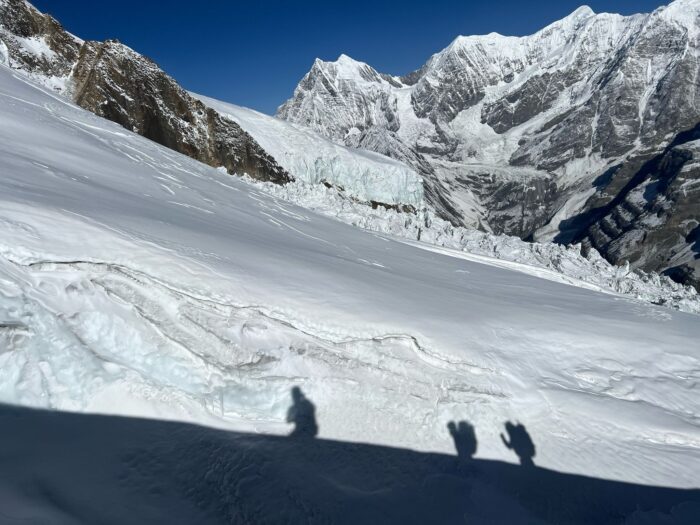
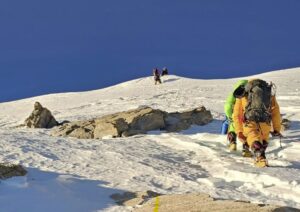
Shadow of climbers on Annapurna. Photo: John Black
Mountaineers and collectors
Eva and Black have been climbing mates for years and have climbed extensively around the world. In 2022, climbing together, they achieved the first South African summits on K2. It was Eva’s first 8,000’er, while Black had climbed Everest back in 2009. They regard the summit as just one part of the climbing experience. They were surprised to find some people in Annapurna Base Camp had very different outlooks.
“I feel some people come to the highest mountains with the single goal of ticking off the summit,” Black said. “I can’t understand how someone can plan a Himalayan expedition and then get helicoptered in and out of Base Camp. The trekking is stunning, with forests and waterfalls and an amazing culture, [it is] an inherent part of the experience,” Eva said.
The two friends planned Annapurna in spring thinking the peak, famed as dangerous and technically demanding, wouldn’t be as crowded as other 8,000’ers in Nepal. They were wrong.
Authorities granted a record number of permits for Annapurna this year, 66 at last count. Nearly 40 people, at least half of them Sherpas, reached the summit on April 6 and 7.
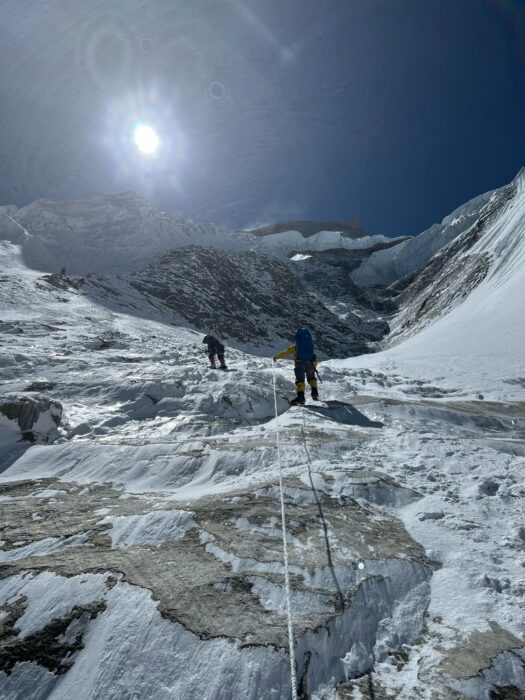
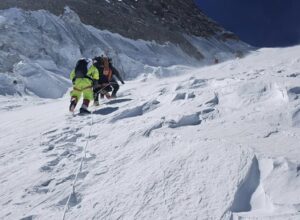
Climbing on a dry Annapurna. Photo: John Black
Eva and Black had planned to stay in Nepal’s mountains for at least two months. On Thursday, they changed their return plane tickets and they will be back home by the end of the week.
Two points of view
Eva and Black took part in the massive summit push launched on April 6. The push began immediately after ropes were fixed to the summit on the third attempt and only four weeks after the rope-fixing team first set foot on the mountain.
Crowding was the least of their problems. While the bulk of climbers were approaching the summit, an avalanche swept the route between Camp 2 and Camp 3, killing two Nepalese climbers. Hours later, SOS calls rolled in from the higher camp, prompting a shocking number of airlifts.
Eva and Black were in different spots at the time. While Eva became the first South African to reach Annapurna’s summit, Black turned around before the summit, took a rest in Camp 3, and then climbed down. Black escaped the deadly avalanche by 15 minutes and then saw the rescues from Base Camp.
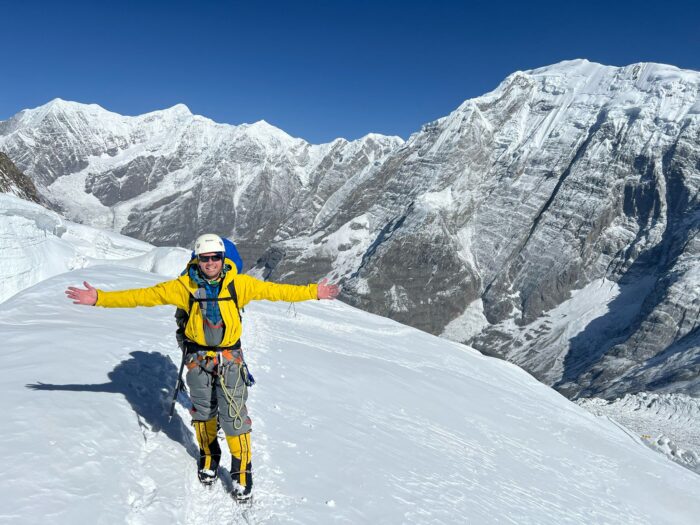
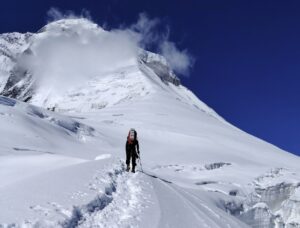
Warren Eva on Annapurna. Photo: John Black
The summit push
Black and Eva departed Camp 3 at around 7 pm on April 6; they were the last to depart.
“Some other groups had left in the afternoon, but we considered it unnecessary. We didn’t want to reach the summit before sunrise,” they explained. Outfitted by Pioneer Adventure, they set off with a supporting Sherpa each and supplementary O2.
“We planned to try without O2, but that plan involved having a Camp 4, which was not there. Doing three acclimatization trips before attempting the summit was not an option for us; the early summit push gave us just enough time for a single rotation, and we didn’t feel well acclimatized,” they said.
Asked about when climbers start using O2 on Annapurna, they said that most people started at Camp 3. However, they saw at least two people with masks on from Camp 2.
“I am not sure whether that is a good idea,” Black said. “While O2 makes you go faster, wearing the mask on the technical sections above Camp 2 is a burden.”
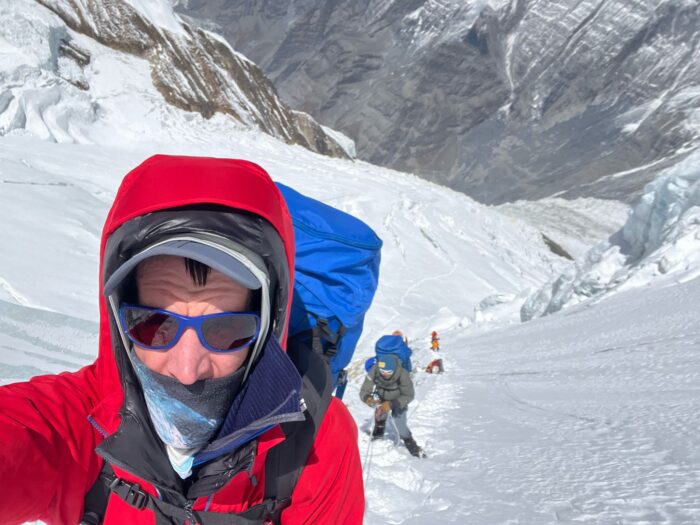
John Black’s selfie while climbing on Annapurna. Photo: John Black
The climbers noted there was a significant number of people on Annapurna with no mountaineering experience.
“We’ll see the summit statistics, but not everyone on the mountain was in condition to attempt the summit,” Eva noted.
Eva’s summit
Shortly after departing on the final push, Black’s progress stalled amongst the crowds.
“I was feeling physically strong and healthy, but mentally unsettled, too aware of my lack of acclimatization. All my thoughts were on the long day and the lack of a Camp 4 that I could have used on the descent if I kept going,” Black said. “It is not that I was in a race or anything, but at high altitude, speed is important. The quicker you move, the less time you are exposed to altitude, potential avalanches, or rockfalls. With that in mind, I had to turn around.”
Black stressed that their tent in Camp 3 was pitched at 6,400m, a whopping 1,700 vertical meters below the summit.
Meanwhile, Eva continued at a good pace with Kaji Sherpa (whom Eva cannot praise enough). Soon they started passing other climbers, and before dawn, they had reached the rope-fixing team. They went across some sections without ropes or used old ropes from previous seasons.
“It was steep but were were confident on that kind of terrain,” Eva said.
Shortly before 9:20 am, Eva and Kaji Sherpa stood on the summit.
Angela Benavides graduated university in journalism and specializes in high-altitude mountaineering and expedition news. She has been writing about climbing and mountaineering, adventure and outdoor sports for 20+ years.
Prior to that, Angela Benavides spent time at/worked at a number of local and international media. She is also experienced in outdoor-sport consultancy for sponsoring corporations, press manager and communication executive, and a published author.