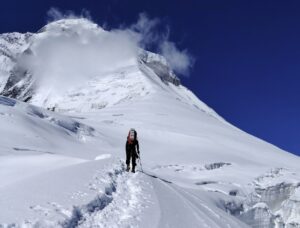
The members of the winter Annapurna expedition are back in Base Camp after a successful first round up the mountain. The Seven Summit Treks rope fixers reached 6,700m, around Camp 4. Next time, they will go for the summit.
“It was very cold, down to -25°C and windy at times, but otherwise, we enjoyed clear skies,” Sajid Sadpara told ExplorersWeb from Base Camp on Thursday. “The forecast [is for] high winds until January 8, but after that, we plan to try and reach the summit.”
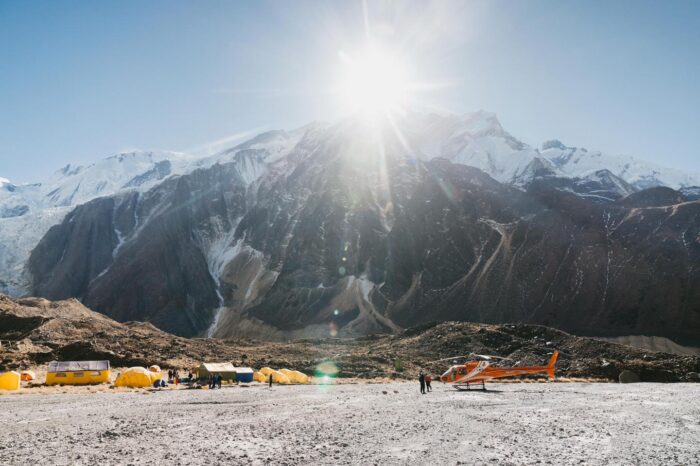
Annapurna Base Camp this week. Photo: Alex Berasategi
Winter strategy
The climbing strategy is basically the same as on any other commercial expedition but in a colder, windier environment. Fewer rope fixers and camp staff also add challenges. That will require everyone to carry heavier packs and perform more independently during the early rounds up the mountain.
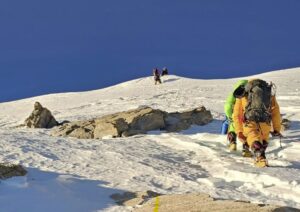
As we noted in our previous update, sherpa climbers Chhepal and Lhakpa Gelu are laying the ropes and setting up the camps, usually helped by Sajid Sadpara of Pakistan. The rest of the group reached Camp 2, according to a post from Sarah Abdovais of Iran and the tracker of Mattia Conte of Italy.
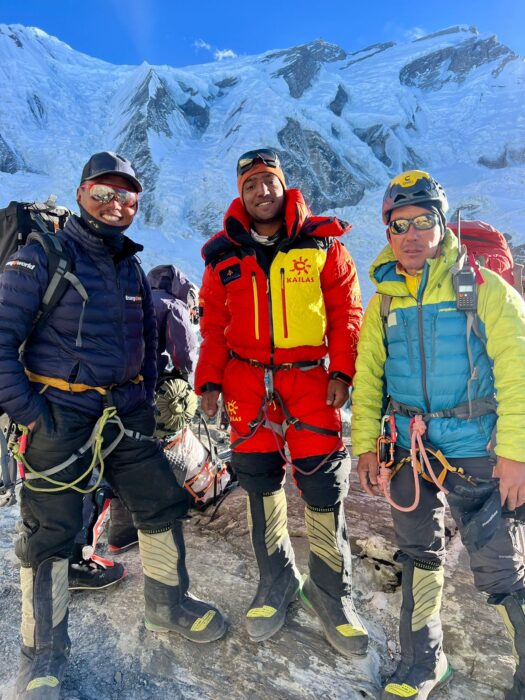
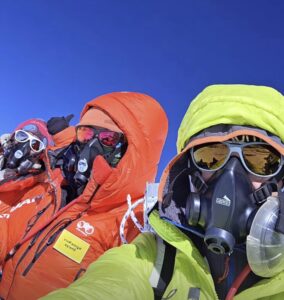
Working hard on winter Annapurna. Left to right, Cheppal Sherpa, Sajid Sadpara, and Lhakpa Gelu Sherpa
What about O2?
On previous Seven Summit Treks winter expeditions, the sherpa staff turned to bottled oxygen at around 7,000m, while Alex Txikon climbed without.
Txikon is recovering from appendix surgery in Kathmandu and has not confirmed whether his expedition has ended. However, he is unlikely to recover in time. The Basque climber was back on his feet one day after the operation, but climbing a winter 8,000m peak is not an average exercise people do after surgery.
Meanwhile, Waldemar Kowalewski is in Bangladesh, solving some visa issues. He told ExplorersWeb that he will be back in Nepal tomorrow.
Cold and dry
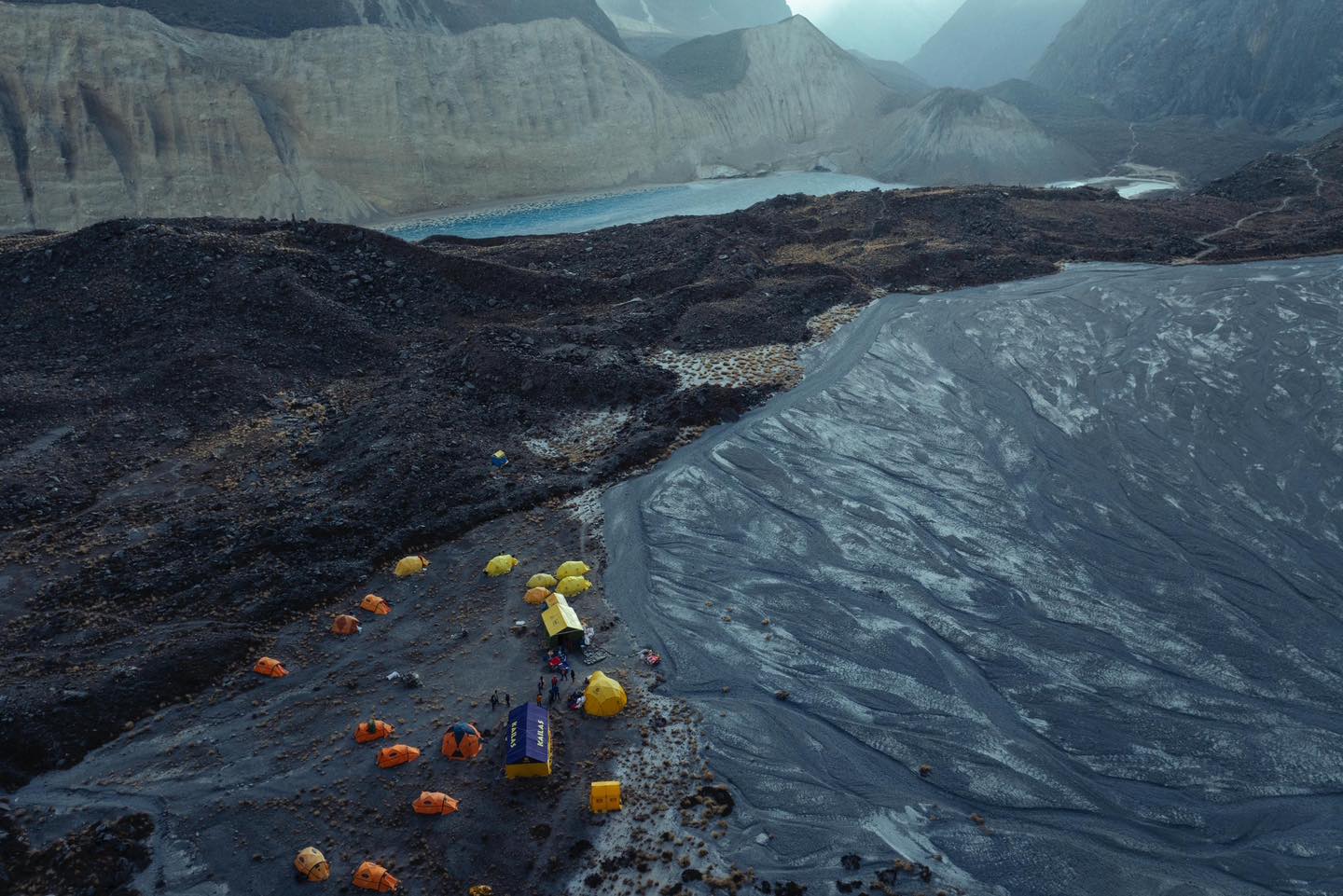
In winter, Annapurna is bitterly cold and remarkably dry.
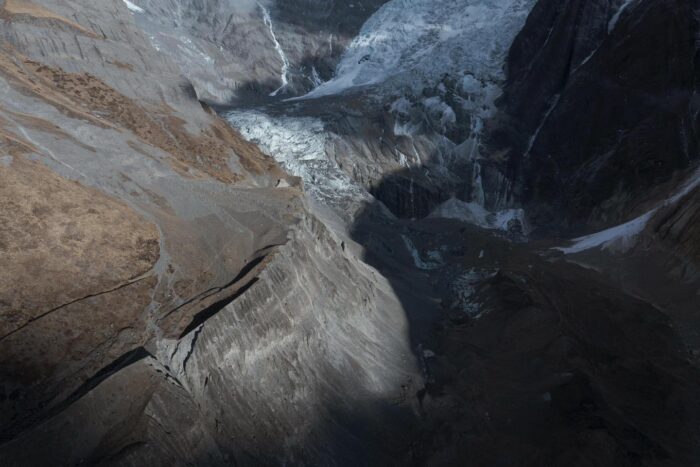
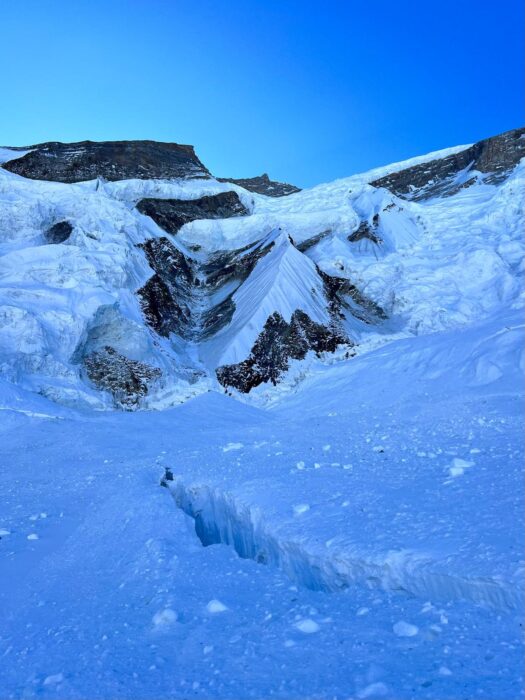
Moraine and dark glaciers in winter on Annapurna. Photo: Alex Berasategi
Sections that are usually on snow will now feature bare ice as hard as marble. By now, the wind has blown away most of the snow from the monsoon.
“Everything felt icy and hard, with large sections of bare glacier,” recalled Moeses Fiamoncini of Brazil, who attempted winter Annapurna last year.
Sajid Sadpara, a winter K2 survivor, is familiar with this brittle terrain and considers it a positive.
“Snow conditions are now perfect, with all the excess powder snow swept away,” he told ExplorersWeb. “High winds…are the main challenge during winter expeditions.”
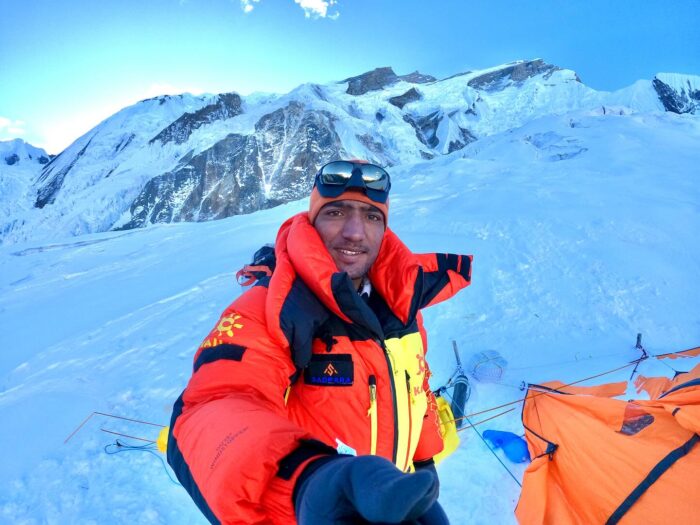
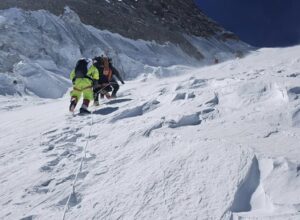
Sajid Sadpara at Camp 1 on winter Annapurna.
“We faced no avalanches or seracs falling above Camp 2,” Sadpara added, “but we had to deal with 50kph winds and bitter cold.”
The risk of snow avalanches is much lower in winter than in spring. But that does not mean nothing can fall on climbers’ heads.
Serac danger
“We did have several avalanches [in winter 2023-24], all caused by seracs breaking off,” Fiamoncini told ExplorersWeb. He described the challenges as follows:
Between Camp 1 and Camp 2, and even up to Camp 3, the avalanches were much more dangerous. During the short time I spent there, I witnessed three or four avalanches, all from seracs. One of them, below Camp 1, was massive and nearly hit Alex Txikon. If he had been 5 or 10 minutes ahead, the avalanche would certainly have caught him. It was a gigantic serac collapse.
Winter Annapurna 2024, with a crevasse in the foreground and behind, the Great Couloir, with serac debris falling from the top. Photo: Moeses Fiamoncini