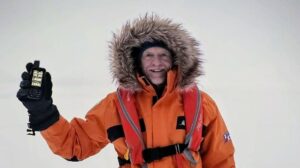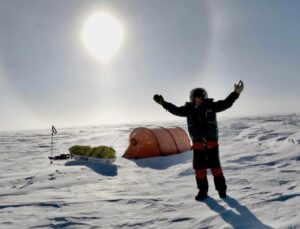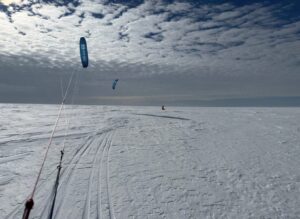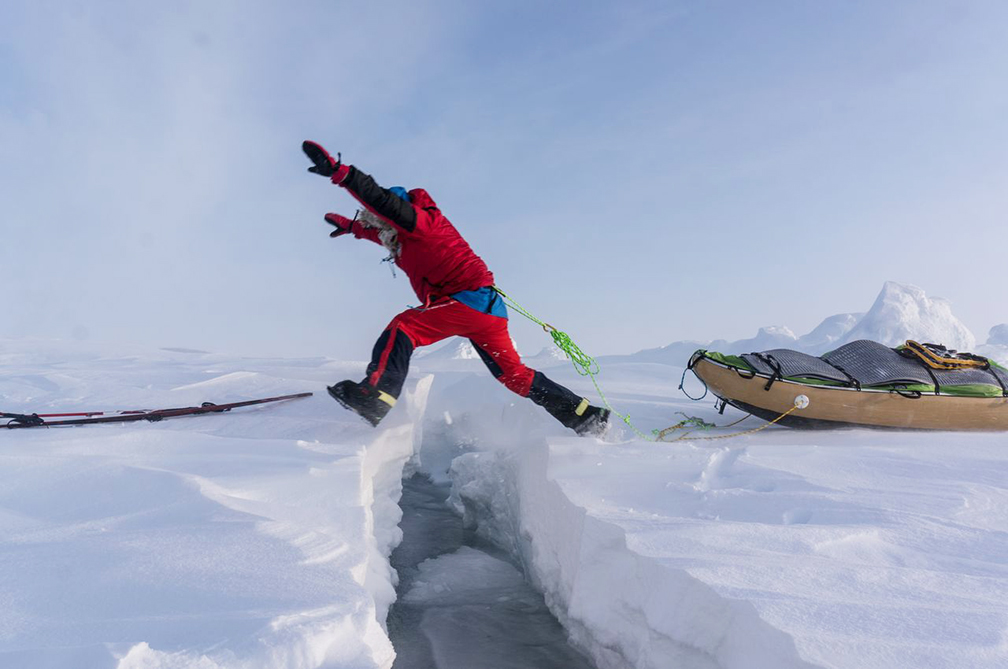
Polar expedition guide Eric Larsen is organizing a full-length expedition to the North Pole for five people next year. If they succeed, it will be the first full-length trek to the Pole since Larsen and Ryan Waters did it unsupported in 2014.
The guided group will leave from Cape Arktichesky in northern Russia and will receive three helicopter resupplies en route. “We’ll have a resupply after the first week,” Larsen told ExplorersWeb. “We’ll be carrying 10 days of food and fuel.”
The frequent resupplies will keep the sleds relatively light, 60kg or so. Larsen estimates that the journey will take 50 to 55 days.
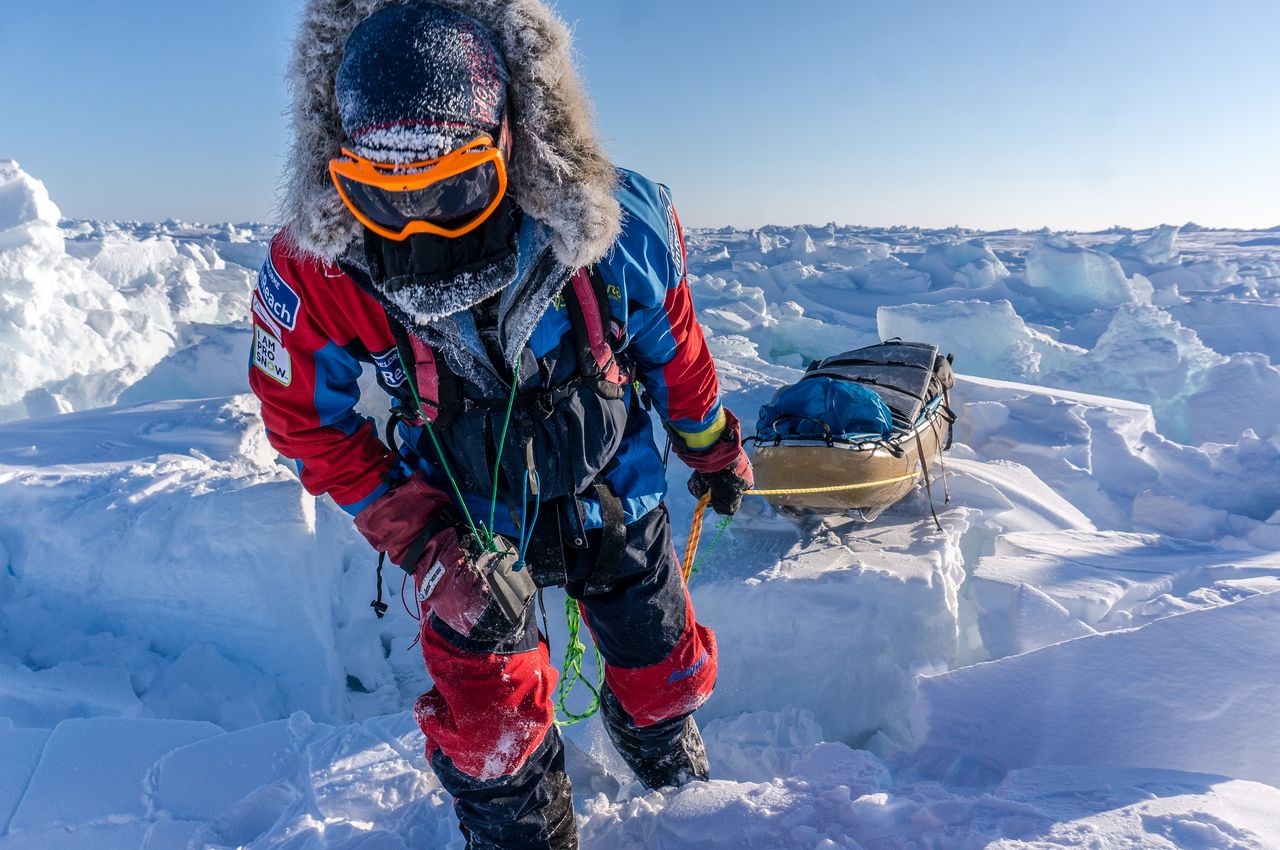
Eric Larsen and Ryan Waters did the last full-length expedition to the North Pole in 2014. Photo: Eric Larsen
In the 1990s and 2000s, the North Pole was on every polar adventurer’s radar. Almost every spring, several parties attempted the full ski trek from land to the Pole. At first, everyone went from Canada’s Ellesmere Island — the historic starting point. But as Russia briefly opened its arms to the West, local entrepreneurs jumped at the chance to earn hard currency. Homegrown adventurers like Viktor Boyarsky started offering logistics, and Cape Arktichesky in northern Siberia became a popular option from which to start. The Barneo Ice Station, which developed around that time, made pickups at the Pole relatively cheap, because the station typically lay just 100km from the North Pole. It catered mainly to champagne tourists and Last Degree skiers, but full-length expeditions saved money with it.
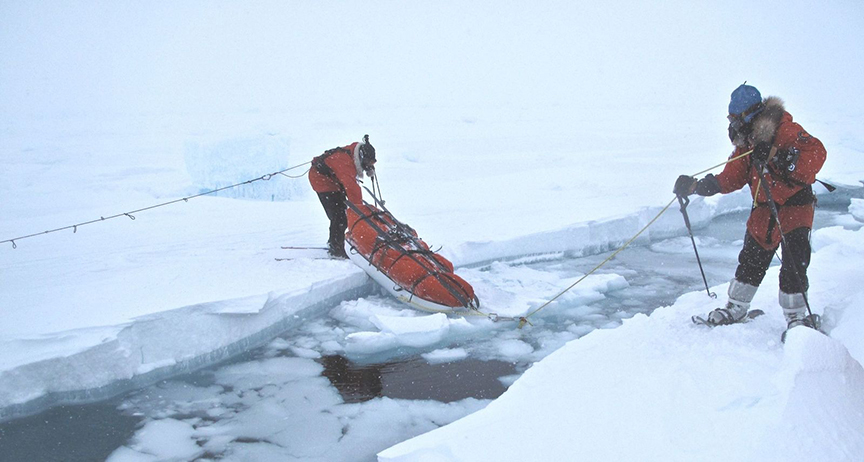
A North Pole expedition is a lot more technical and difficult than a South Pole trek.
Longer but easier
An expedition from Cape Arktichesky was longer — 990km versus 765km from Ellesmere Island — but a Russian start had compensating advantages. The pressure ice was easier in that direction, and you were going with the drift of the ice rather than against it. Skiers from Canada often lost mileage as they slept, as currents nudged the ice they were on back toward shore. It was like going up a down escalator.
The one disadvantage of going from Russia was the first 50km. Some years, the ice was good, but often, adventurers who insisted on starting their expedition from land risked perilous conditions. In 2006, it took Borge Ousland and Mike Horn 17 days to escape the maelstrom of currents around the coast and reach solid ice on their winter trek. Two years earlier, in 2004, Frenchwoman Dominick Arduin disappeared after one day on the ice. Her body was never found, and it is assumed she fell through thin ice.
“I am not committed to starting from land,” said Eric Larsen. Modern adventure — “adventure, not exploration” — often comes with qualifiers, he explained. “This is as full an expedition to the North Pole as it’s going to get.”
Explorer’s Grand Slam
Nevertheless, there has been ice at Cape Arktichesky in recent years, so if 2027 is a good ice year, a full expedition from land may be possible for those dreaming of completing the ultra-rare Explorer’s Grand Slam — the 14 8,000’ers plus full-length treks to both the North and South Poles. Of these, the North Pole is by far the most difficult. Fewer than 250 people have skied from land to the North Pole.
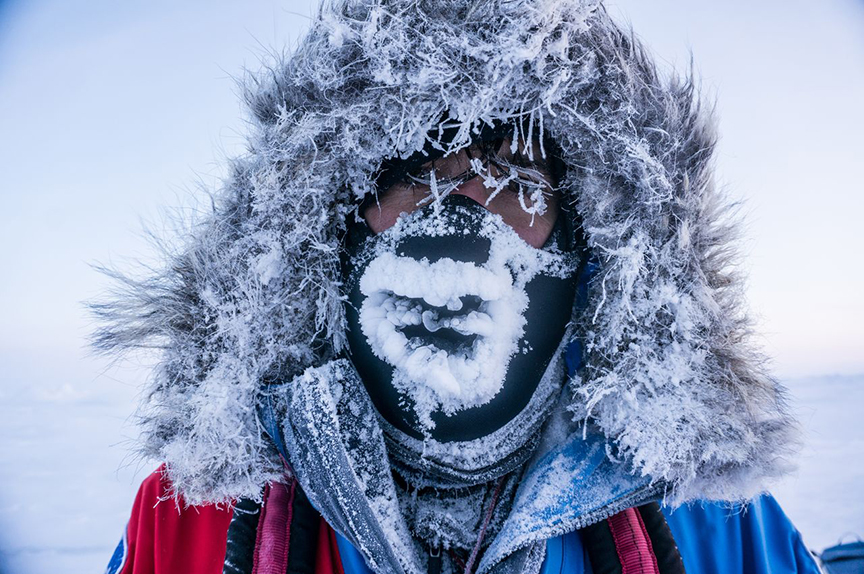
The cost of all this fun? — $250K. Photo: Eric Larsen
The cost of this one-of-a-kind expedition? Because of the extensive helicopter support and the need to establish fuel caches on the ice en route to the Pole, it won’t be cheap — up to $250,000. These are also big helicopters — Russian MI8s. They are considerably larger than the helicopters the new company, SIX, will use for its one-time Last Degree North Pole trips out of Longyearbyen, Svalbard next year. SIX was never interested in supporting full-length expeditions.
“Unfortunately, we cannot support full-length expeditions from Canada or Greenland due to a combination of aircraft ranges and the permits we would need to increase range,” it said in its initial announcement.
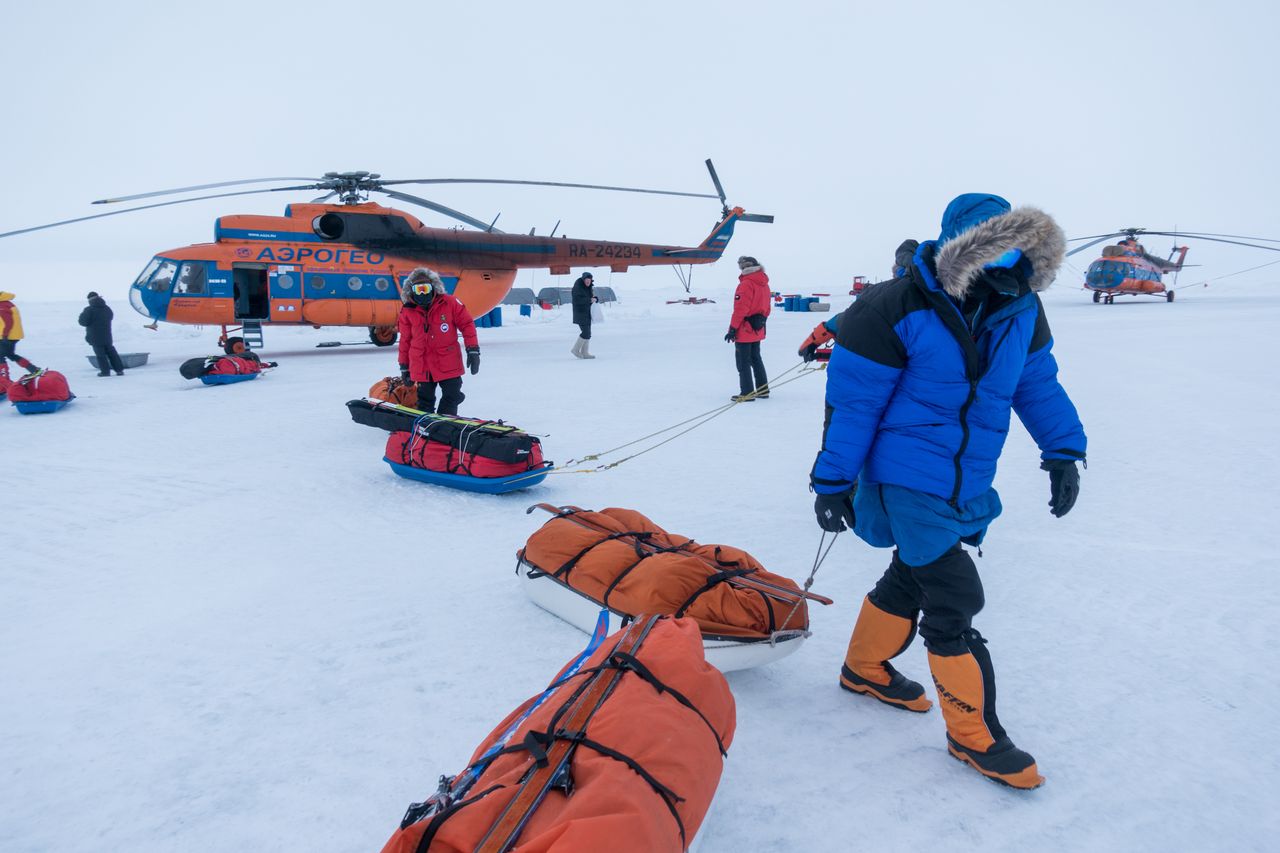
A big Russian MI-8 helicopter, background, will supply the skiers every couple of weeks. Photo: Eric Larsen
Three spaces left
Larsen already has two people signed up. He needs five to make the expedition a go, so there remains space for three more. He will accompany the group as the guide.
It may end up costing less than a quarter of a million dollars. The Barneo Ice Station has not operated since 2018 for political reasons (the war in Ukraine, among others), but Larsen suggests there’s a chance it may run in 2027. However, for the past three years, ExplorersWeb has been reporting glimmers of hope from Barneo organizers, only to have those hopes vanish at the last minute. But if Barneo does run, says Larsen, the cost will be much less.
Expeditions from the Ellesmere side haven’t run since 2014 for different reasons. Kenn Borek, the Canadian charter airline whose Twin Otter aircraft supported North Pole expeditions during the 1990s and 2000s, is no longer interested in the risky business of landing on thinner sea ice or in being responsible for adventurers in trouble. These Twin Otter pilots, who also work in Antarctica, are the best in the world, but they aren’t perfect, and at least two Twin Otters from earlier, more seat-of-the-pants times lie at the bottom of the Arctic Ocean.