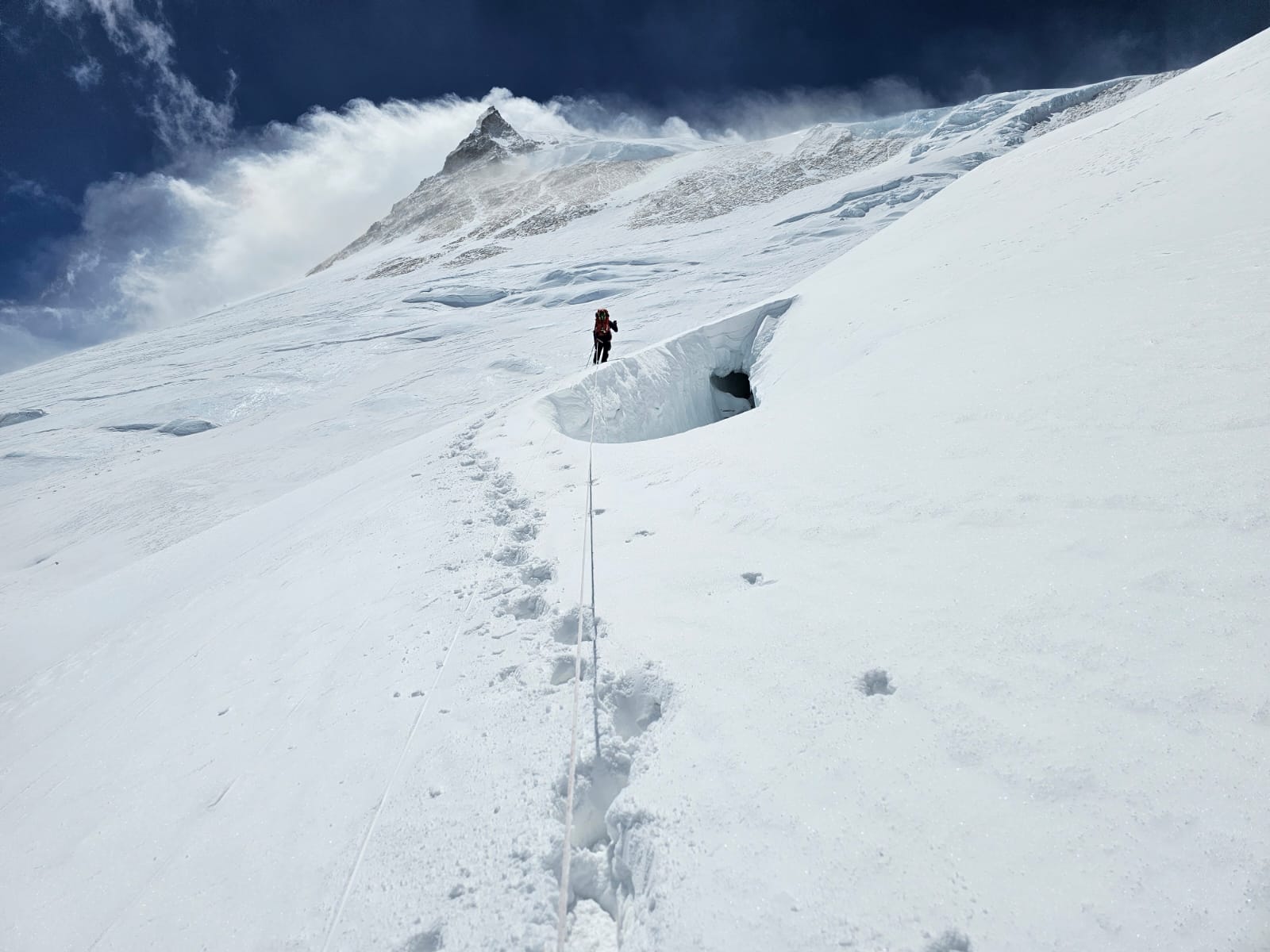
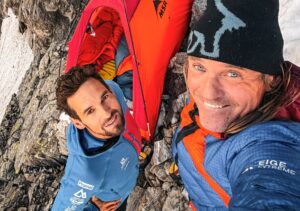
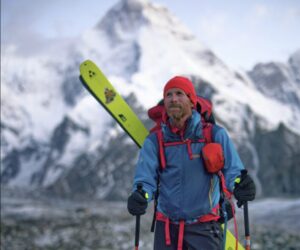
A lonely climber on Manaslu earlier this week. Photo: Mark Ablovacky
In spring, Manaslu is a different mountain from the crowded fall season. Alex Moroz of Ukraine and Mark Ablovacky of Russia have sort of traveled back in time earlier this week and returned to an era of heavy backpacks, technical sections, an open bivouac at 7,500m, and a tricky descent on avalanche-prone slopes.
Moroz and Ablovacky had the only permits issued for Manaslu so far this year. They climbed the mountain with no oxygen, no Sherpa support, and no fixed ropes (except for some meters of old ropes Moroz clung to near the summit).
They didn’t even bother to set a base camp: When not on the mountain, they retreated to Samagaon village. They completed the no-O2 climb in only 15 days from Kathmandu. “It was an interesting experience,” they told ExplorersWeb after their return.
Alone on the mountain
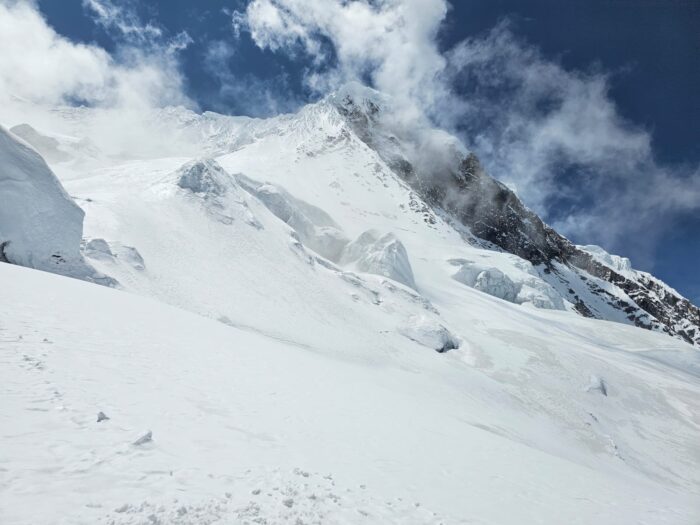
Pristine Manaslu earlier this week, from near what is usually Camp 1. Photo: Mark Ablovacky
Short of time and with an equally short weather window, the pair had to make a hard decision: to attempt a no-oxygen, self-sufficient summit push with only one previous rotation to 6,100m.
“The weather forecast was not great, so we skipped our planned second rotation and tried to use a short weather window for the summit push,” Ablovacky explained. Previously, their highest point was the Larke La (5,100m), as they trekked over the pass to Samagaon.
The team had left a small amount of gear stocked at Camp 1 (5,800m): down suits, some food, and fuel. They carried everything else, including tent and sleeping bags, all the way up and down the mountain.
Dry conditions
The climbers set off from Samagaon on April 24 with heavy backpacks and pitched one camp a day, in roughly the same locations as the camps used during peak season.
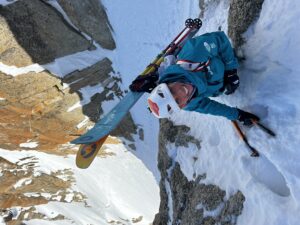
Otherwise, they found themselves on a different Manaslu. No crowds, camps, or post-monsoon snowy slopes. Dry and windswept, the route provided challenging conditions with large parts on bare ice. (Check the video below.) Approaching the summit, they experienced sections of frozen rock that required dry-tooling.
“It is not super hard from a technical point of view, but at 7500m+, it is really tricky terrain,” said Ablovacky.
Angela Benavides graduated university in journalism and specializes in high-altitude mountaineering and expedition news. She has been writing about climbing and mountaineering, adventure and outdoor sports for 20+ years.
Prior to that, Angela Benavides spent time at/worked at a number of local and international media. She is also experienced in outdoor-sport consultancy for sponsoring corporations, press manager and communication executive, and a published author.