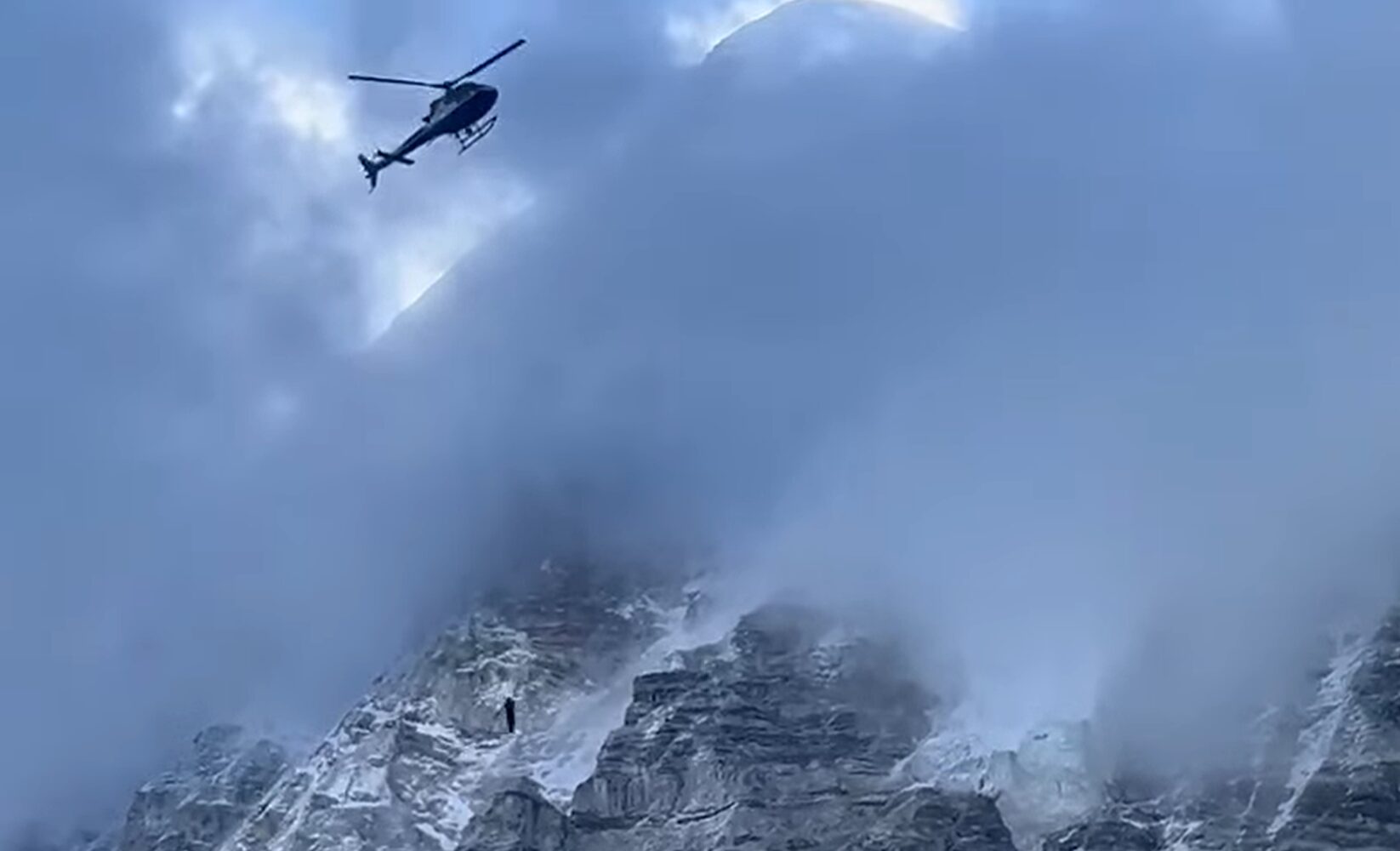
A rescue helicopter with a climber at the end of a long line approaches Everest Base Camp. Frame of a video by Everest ER Base Camp Clinic.
Despite their usual attitude of ignoring controversy, at least in public, the Sherpa guides who work on Everest have responded vigorously to the sloppy headlines that denigrated their profession last week.
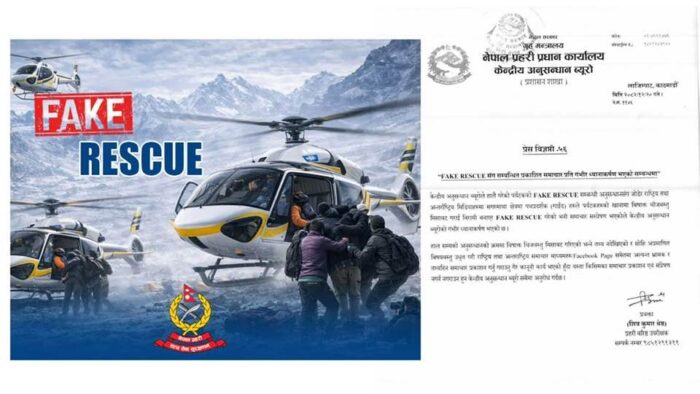
Last Thursday, worldwide media trumpeted sensational news about “Everest guides poisoning their clients” with baking soda (!) in order to trigger fake rescues. That day, we published a long piece explaining the origin of the story, what the facts were, and what was misleading — basically, everything to do with Everest. An ongoing investigation launched in 2018 revealed that some small trekking companies had built a complex scam involving helicopter pilots, trekking guides, and hospital personnel, targeting insurance companies and, occasionally, trekkers.
Some other mountaineering sites followed up on our initial story, but the large culpable media, including The Guardian, The Times, People magazine, etc. — never corrected their initial misunderstanding. The news spread further over the weekend, while Everest guides, mainly Sherpas, stood by in disbelief.
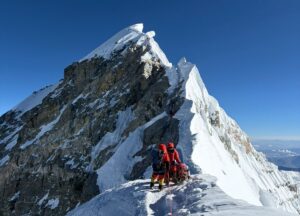
Gelje Sherpa carries a sick climber from Everest’s Balcony. Photo: Gelje Sherpa
We save, not harm!
“We Sherpa guides never make people sick by poisoning,” Pemba Sherpa, one of the owners of 8K Expeditions, wrote angrily. Rather than hurt clients, guides help and often save them, he added.
Angela Benavides graduated university in journalism and specializes in high-altitude mountaineering and expedition news. She has been writing about climbing and mountaineering, adventure and outdoor sports for 20+ years.
Prior to that, Angela Benavides spent time at/worked at a number of local and international media. She is also experienced in outdoor-sport consultancy for sponsoring corporations, press manager and communication executive, and a published author.