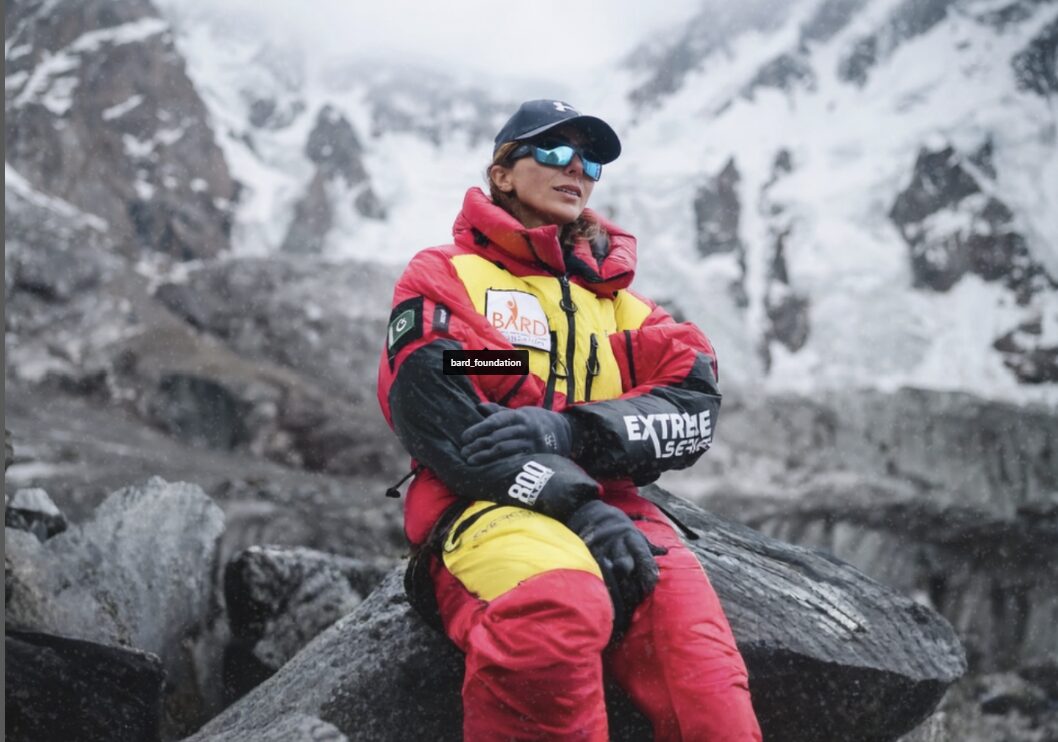
Naila Kiani is on her way to becoming the first Pakistani woman to complete the 14×8,000’ers, but her impact goes beyond summits. Kiani is driving change in her country’s mountaineering scene, speaking up for those without a voice and making more than a few enemies along the way.
During her 14×8,000m quest, Kiani has been a reliable, outspoken witness in the usually secretive commercial climbing industry. She was the one who denounced how climber Ali Akbar Sakhi of Afghanistan was abandoned close to Camp 3 on K2, and faced threats when she accused Sakhi’s outfitter of negligence.
Kiani also reported what happened on Shisha Pangma in 2023, when a race to become the first American woman to finish the 8,000m list ended with both women’s deaths, alongside their Sherpas. After porter Ali Muhammad Hassan died at K2’s Bottleneck, and a hundred climbers passed him on their way to the summit, Kiani coordinated a team of local climbers to return his body in the highest retrieval operation ever performed on K2. She has also led cleaning campaigns on the mountain.
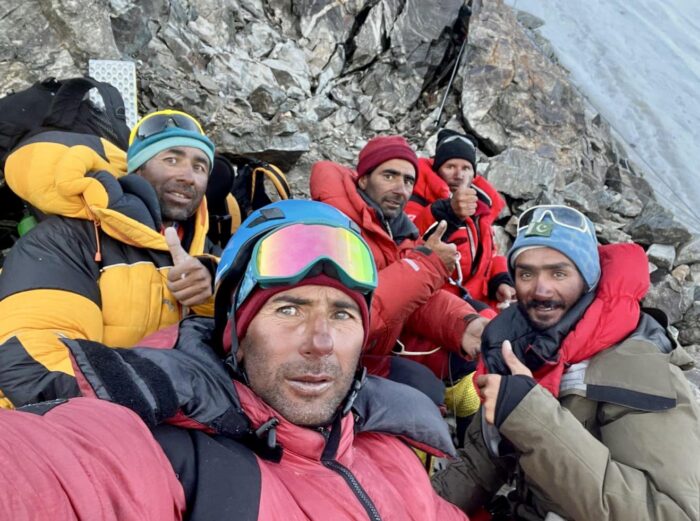
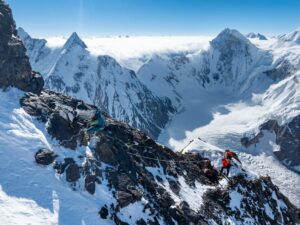
The rescue team that retrieved the body of Ali Muhammad Hassan from K2’s Bottleneck. Left to right: Zakir Hussein, bottom left, Dilawar Sadpara, Akbar Hussein, Murad Sadpara, and Ali Mohammed Sadpara, bottom right.
This year, Kiani has spoken out on behalf of a group of local porters whose outfitter had not paid them. She knew the porters were too vulnerable to protest by themselves and that the loss of income might mean misery and hunger for their families.
Changes in aerial rescues
In the last few weeks, Kiani also made two promising announcements: the establishment of a mobile medical dispensary in the Karakoram and a change in helicopter protocols for mountain rescues in Pakistan. Until now, army pilots have managed helicopter rescues, flying in two helicopter patrols that charged $26,000 per flight — the most expensive fee in the world.
“Last year, I spoke out against the extremely high prices that sick and injured climbers were being charged for helicopter evacuations,” Kiani said. “Many told me to stay quiet, and that no one would listen.”
Instead, she wrote letters and contacted high-ranking army officials directly. Kiani provided lists of prices comparing aerial rescue services and their costs in several mountain ranges around the world.
“I clearly explained that climbers evacuated in Pakistan were paying way, way too much,” Kiani told ExplorersWeb.
To the surprise of the skeptics, the military listened. The new president of the Alpine Club of Pakistan (and Army General), Irfan Arshad, supported Kiani in this quest. The protocols have now changed, and, if applied, the impact will be huge.
Rescues 60% cheaper
Now, the helicopters don’t need to fly in pairs.
“Only one helicopter is being sent for rescues, bringing the cost down to under $9,900 on average, nearly one-third of what climbers were paying before,” Naila explained.
The change will also double the rescue capacity of the Pakistani air force, as each helicopter may attend to a different rescue at the same time.
Kiani has also insisted on a stricter account of the rescue charges, as the previous cost (calculated per hour of flight time) was sometimes inaccurate.
Finally, Kiani hopes the new protocols will prioritize serious medical cases without insurance companies agreeing to foot the bill first. This would greatly benefit many local porters, who either lack insurance or have limited coverage.
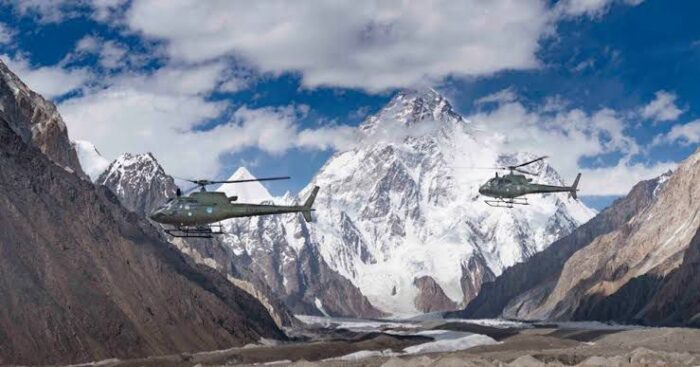
Helicopters fly past K2 in the traditional, paired formation. Photo: Naila Kiani
Kiani is hopeful costs will decrease immediately, but she also foresees further improvements. She told Explorersweb that the situation will improve when Pakistan allows private helicopter companies to operate rescues (as they can in Nepal), which Kiani is confident will happen in the future. In her opinion, private companies will lower costs and may be more flexible regarding altitude and weather conditions for rescues.
These improvements may seem logical, but in a country like Pakistan, where the army is incredibly powerful and rarely influenced by external forces, what Kiani has achieved is more extraordinary than any of her climbs.
Dispensaries in the Karakoram
Kiani has also lobbied for (and helped finance) the installation of two paramedical dispensaries along the Baltoro during the summer season. One is already operating at Concordia, one day from K2 Base Camp, and another is ready to start operating in Urdukas, as soon as the assigned nurse gets there.
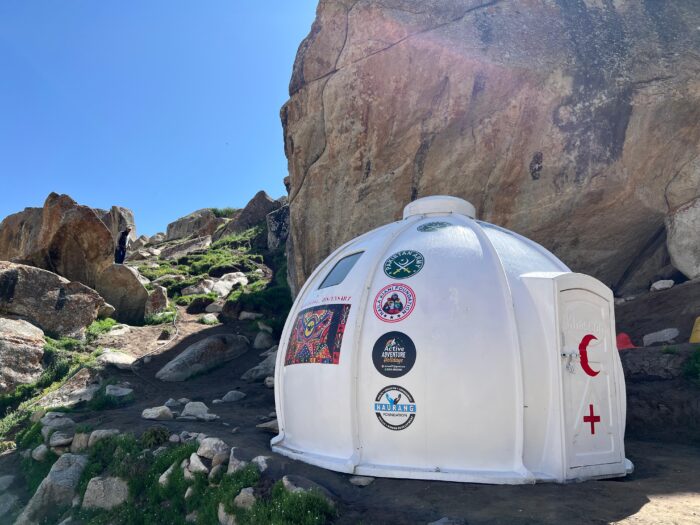
The free dispensary in Urdukas. Photo: Naila Kiani
“They will treat everybody for free: trekkers, climbers, and locals working in the area,” Kiani said. “Finally, there is a semi-permanent facility to provide sanitary care during the Baltoro trek: igloos prepared to endure harsh weather.”
The lack of facilities was a serious problem, particularly for local porters who had nothing to treat their injuries and disinfect wounds. With no help, even small health issues rapidly developed into serious medical conditions.
“We don’t have a doctor yet, but the nurse managing each dispensary can treat a wide range of issues,” Kiani said.
Kiani will pay the nurse’s salary while Pakistan’s Alpine Club will cover the rest.